
Ocean Warriors Season 1 is dedicated to the late Chief Bill Cranmer, who was instrumental in the completion of the Kwak’wala translations for all 13 episodes. You will be missed.
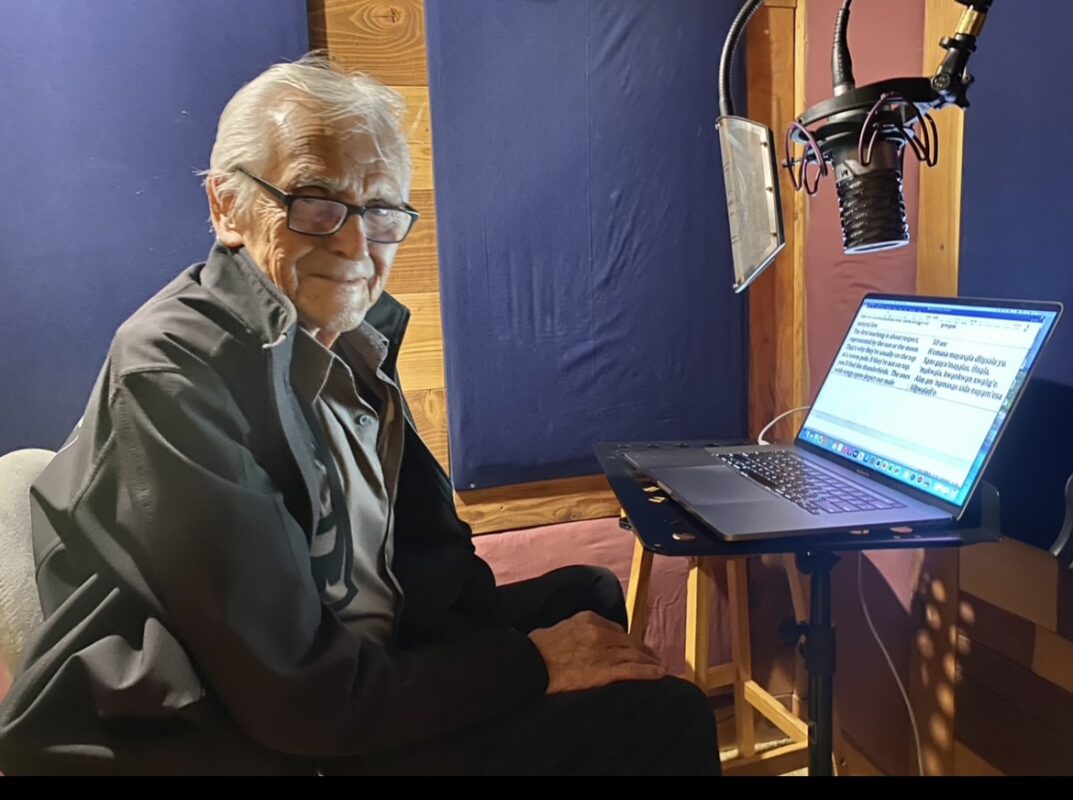
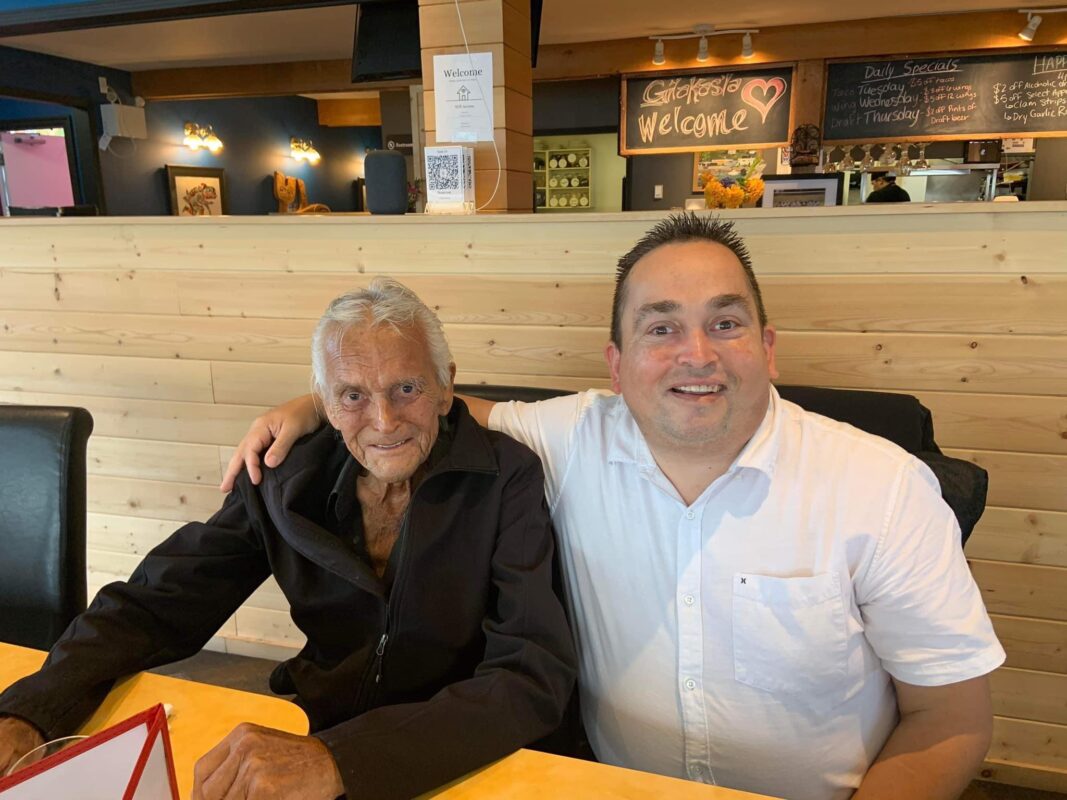
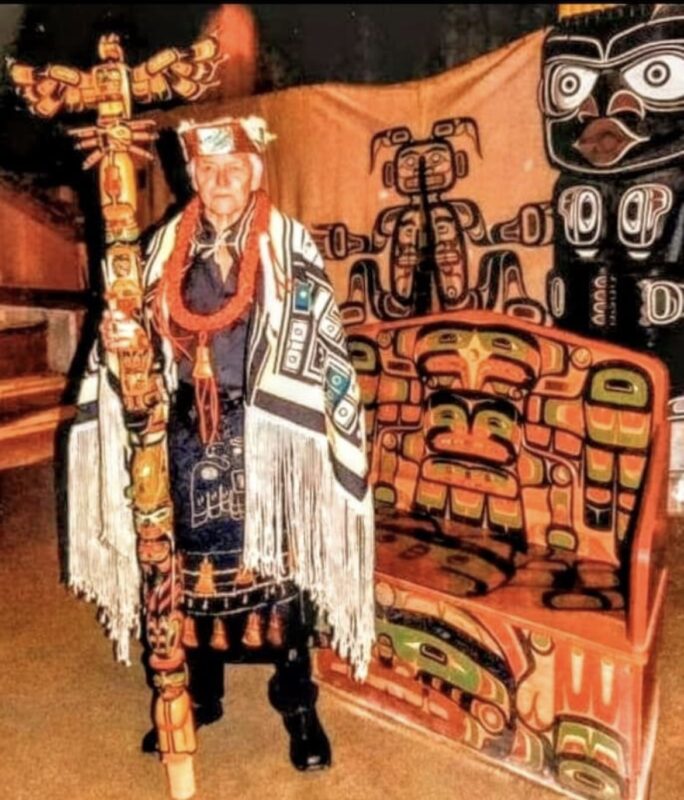
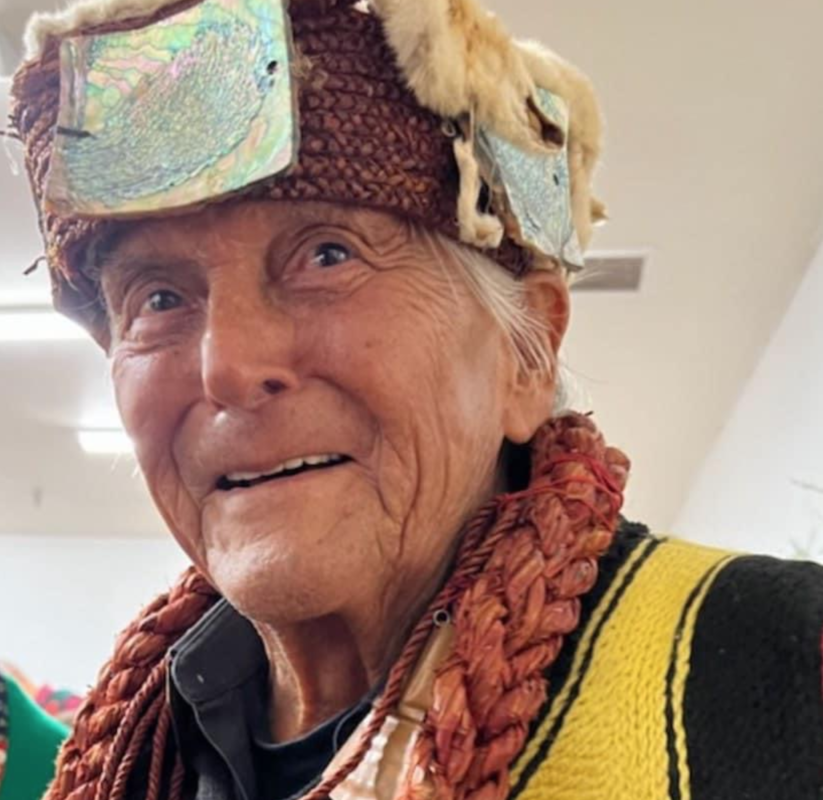
Chief William (Bill) Cranmer – Tłakwagila
October 10, 1938 – January 3, 2024 Alert Bay, BC (Yalis)
Bill Cranmer grew up in the village of Alert Bay, BC (Yalis), speaking his language and is a fluent Kwak̓wala speaker. He speaks the old traditional language, which has gone through some changes over the years as the Kwakwa̱ka̱’wakw people were forbidden to speak their language and have been committed to learning and retaining the Kwak̓wala language in both the spoken and written form.
Bill starting learning to write the language in the early 1960’s. He realized the importance of learning to write the language, so that songs, names, dances, oral history and other important historical information could be passed down to the next generations.
Bill recalls when he started learning the orthography for the Kwak̓wala language and working with his sister Gloria Cranmer Webster and linguist Jay Powell through the U’mista Cultural Centre, where they began developing a written system. They worked with old Kwak̓wala speakers to break down various sounds and create a Kwak̓wala Alphabet. They developed a learning series of booklets and cassette tapes and eventually began contributing to First Voices, an online International resource dedicated to retaining Indigenous languages.
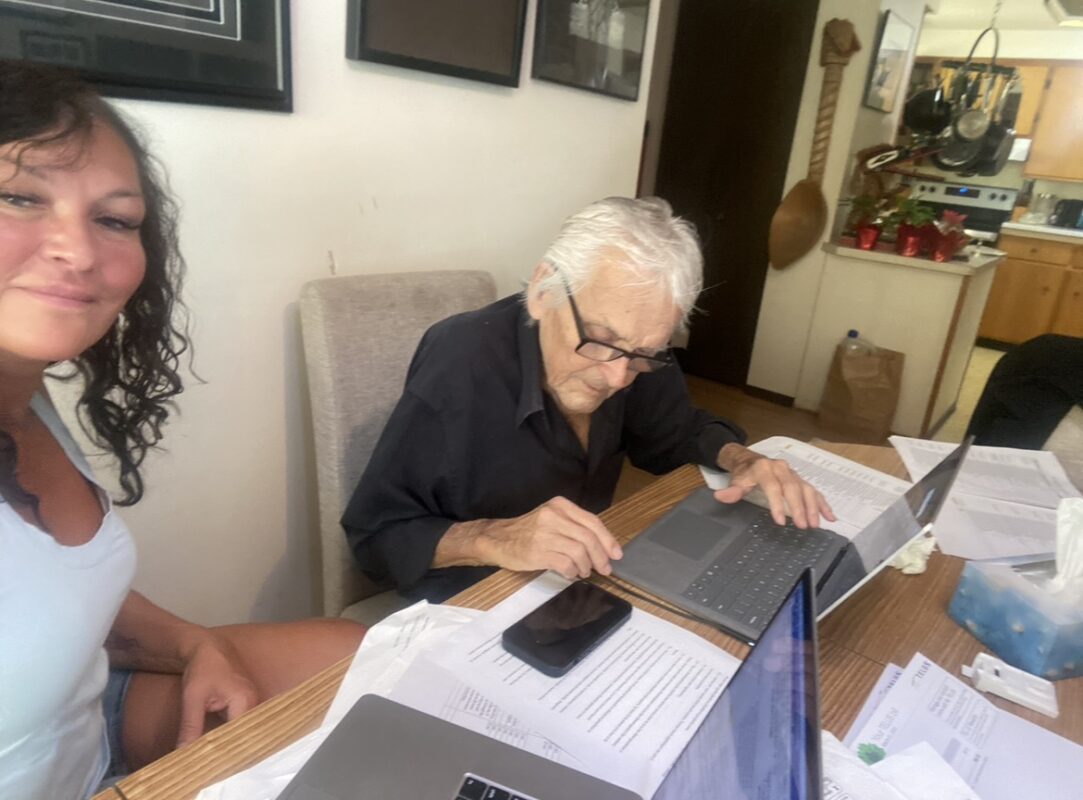
Translating the entire television series of Ocean Warriors into the Kwak̓wala language was something that was much more difficult to do than Bill had expected. He noted he hasn’t written the language in a long time and there were so many nautical terms he hadn’t heard before, so he had to do a great deal of searching to figure out how to say certain things or relay messages from the show. The process was long and tedious in the beginning. However, the more he worked on the translations, it slowly became easier, as he started to recall certain words and how to spell them. He also began working with Michele Mundy around how to rephrase certain scenes so that the Kwak̓wala version would still relay the same messaging, but be said in manner that worked in language translation.
Bill also noted that the more you translate from English to Kwak̓wala, the easier it gets, but you have to do it all the time, or you begin to forget certain words or phrases. Bill is currently working on a Kwak̓wala Dictionary as well, but says it will be a while before it is complete. He describes the process as writing one word, then adding a sentence to go with the word, so anyone reading it would understand how the word can be used in different situations.
This process of translating the Ocean Warriors series took Bill over two months to complete. There were days he was tired and we would decide to wrap for the day, but he was so committed to see this through to the end, with a huge sense of relief and excitement when it was all done!
Gilakas’la Chief William Cranmer (Tłakwagila) for your amazing contributions to our television series Ocean Warriors, in both the written form and through the voice over work we hear on the Aboriginal version of the program.
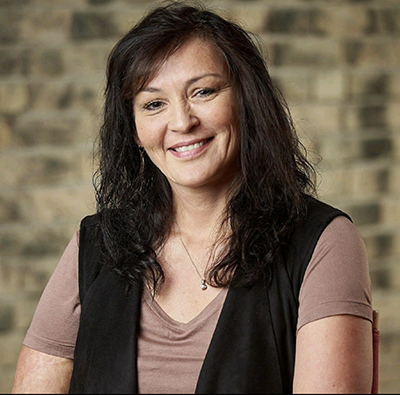
Michele Mundy (Lagius)
It was an honour, educational and such a pleasure working with Bill. I felt like I was given a huge gift to work with one of my own traditional leader, a Chief, a historian, a language speaker and such a humble man throughout this process. I have been the Language Coordinator for a few television series with Kwassen Productions over the years, but the translation segment for this television took much longer than either Bill or I expected. I believe it was because there were so many terms being used that Bill had to really work hard to find translations for. I would watch him sit and think about the words being used, look at the Kwak’wala alphabet, think some more and then finally start to type it out. He was methodical, thorough and determined to ensure the correct words were used in his translations, knowing this would be a potential language resource. Bill shared many personal and work related stories in the hours we sat together as well and it was such an honour to learn more about his personal life than I would have ever known had I not had the opportunity to work on this project with him. For me, I am so grateful for my time spent with Bill and to be a part of what will be a legacy for our Kwakwaka’wakw Nation, that will be preserved and hopefully passed on.
Gilakas’la Bill for allowing me to work and learn alongside of you and thank you for your patience, wisdom, and commitment to see this through.
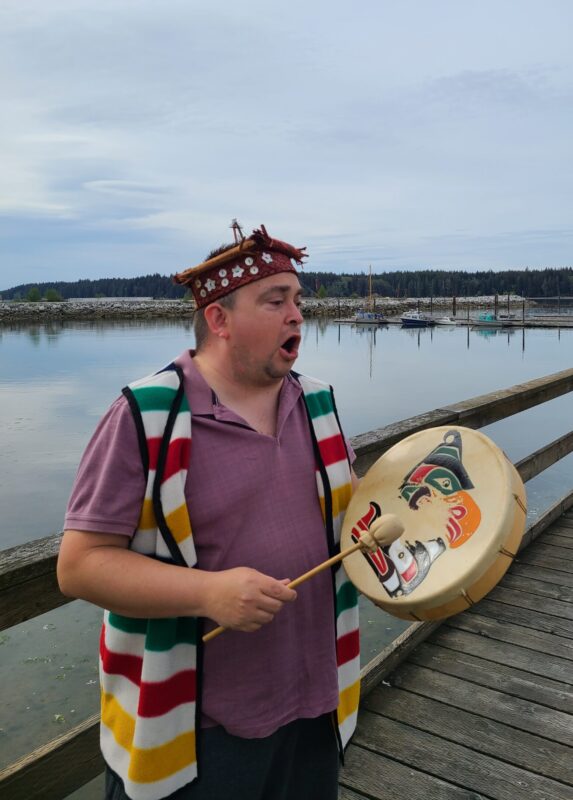
Eli Cranmer (U’magalis)
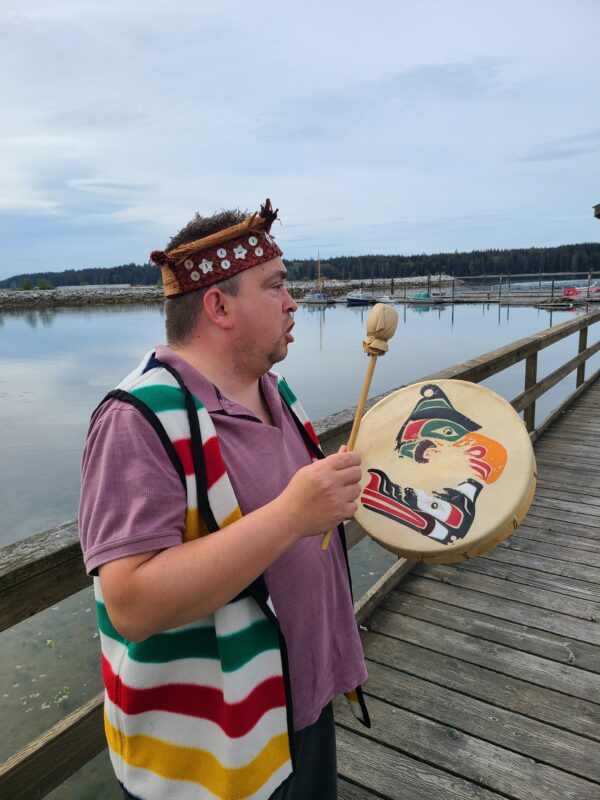
Thank you as well to Eli Cranmer who sings the Paddle Song at the opening of each episode of Ocean Warriors. Eli is a Cultural Teacher at the T̓lisalagi’lakw School in Alert Bay, BC and is the youngest son of Chief Bill Cranmer. Eli teaches songs, dances and the language in the cultural classes to children from pre-school through to grade seven. The Paddle Song you hear here comes from the ‘Namg̲is First Nation.
Click on a link to the Paddle Song:
Having a father and son contribute to the richness of the cultural aspects of our television show, translation services and to bring in important traditional cultural elements is something we are so appreciative and grateful for.
Translations from the English version from one television series to the next can be very different. There are some First Nations languages that have been retained over the years and some where colonization and residential schools have had more of an impact. Where there have been residential schools located, it can be much more difficult to translate from the English language to the traditional language of the First Nation community.
Embarking on the translation aspect of this series, we thought it would be fairly straight forward, but as we started to work on it, we realized it was much more difficult than anticipated. As there was a residential school in Alert Bay, we began to realize there was likely much terminology that had been lost – more specifically nautical terms, which were used in this television series.
Language versioning of television shows can go quite quickly if there are many speakers and where the language is written and in other cases, such as this television series, when there are few “older” speakers left and communities are working to retain their language, it can take longer and be much more costly to complete this portion of deliverable for our funders.